 James
James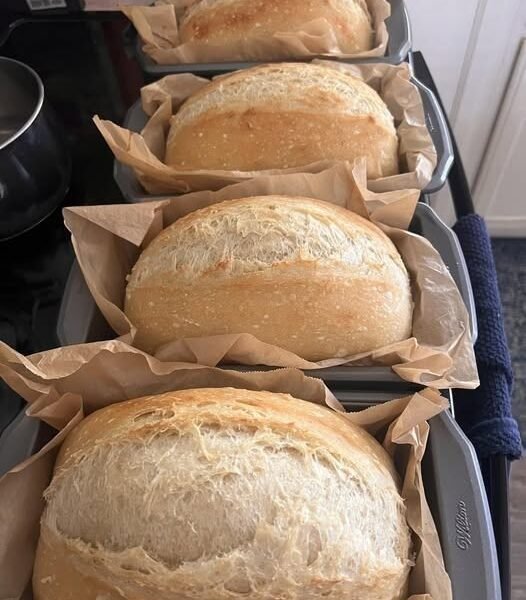
This recipe is designed to produce a light, soft loaf with a tender crumb and a mild flavor. Since gluten-free dough behaves differently from wheat dough, the method emphasizes proper hydration, mixing, and proofing.
Yield
- 1 standard loaf
- About 12–14 slices
Total Time
- Preparation: 30 minutes
- First rise: 45–75 minutes
- Baking: 50–60 minutes
- Cooling: 2 hours
Ingredients
Dry Ingredients
- 2 cups superfine white rice flour
- 1 cup brown rice flour
- 1 cup tapioca starch
- ½ cup potato starch
- ¼ cup sorghum flour
- 2 tablespoons psyllium husk powder
- 2 teaspoons xanthan gum
- 2 teaspoons baking powder
- 1 tablespoon granulated sugar
- 2 teaspoons fine sea salt
Yeast Mixture
- 2¼ teaspoons active dry yeast
- 1 tablespoon sugar
- ¼ cup warm water (about 105–110°F / 40–43°C)
Wet Ingredients
- 1½ cups warm milk (dairy or plant-based)
- 2 large eggs, room temperature
- ¼ cup neutral oil
- 2 tablespoons honey
- 1 teaspoon apple cider vinegar
Optional Ingredients
These are not required but may improve texture.
- 2 tablespoons melted butter
- 1 tablespoon ground flaxseed
- 1 tablespoon chia seeds
- 1 teaspoon sunflower lecithin
- ½ teaspoon cream of tartar
Equipment
- Large mixing bowl
- Small bowl
- Measuring cups
- Measuring spoons
- Stand mixer with paddle attachment (recommended)
- Rubber spatula
- 9 × 5 inch loaf pan
- Kitchen towel
- Cooling rack
- Instant-read thermometer (optional)
Understanding the Ingredients
Rice Flour
Provides the main structure. Superfine flour creates a smoother crumb.
Brown Rice Flour
Adds flavor, nutrition, and color.
Tapioca Starch
Creates stretchiness and softness.
Potato Starch
Improves moisture retention and produces a lighter crumb.
Sorghum Flour
Contributes a mild wheat-like flavor.
Psyllium Husk
Forms a gel that helps replace gluten.
Xanthan Gum
Adds elasticity and prevents crumbling.
Eggs
Provide structure, richness, and softness.
Oil
Keeps the loaf moist for several days.
Vinegar
Supports yeast activity and slightly strengthens the dough.
Step 1: Activate the Yeast
Combine:
- Warm water
- Sugar
- Yeast
Stir gently.
Leave for 5–10 minutes.
The surface should become foamy.
If no foam develops, begin again with fresh yeast.
Step 2: Mix Dry Ingredients
In a large bowl combine every dry ingredient.
Whisk for at least 2 minutes.
Even mixing prevents gummy spots later.
Step 3: Combine Wet Ingredients
Mix together:
- Warm milk
- Eggs
- Oil
- Honey
- Vinegar
Whisk until completely smooth.
Step 4: Form the Dough
Pour:
- Wet mixture
- Activated yeast
into the dry ingredients.
Mix on low speed for 2 minutes.
Increase to medium speed.
Continue mixing for 6–8 minutes.
Unlike wheat dough, gluten-free dough resembles thick cake batter.
Do not add large amounts of extra flour.
The dough should be sticky.
Step 5: Rest the Dough
Allow the dough to rest for 10 minutes.
During this period:
- starches absorb moisture
- psyllium hydrates
- xanthan gum begins thickening
The dough becomes noticeably firmer.
Step 6: Prepare the Pan
Grease the loaf pan generously.
Line with parchment paper if desired.
Transfer dough into the pan.
Smooth the top using a damp spatula.
Round the surface slightly because it settles while baking.
Step 7: Proof
Cover loosely.
Place somewhere warm.
Ideal temperature:
75–85°F (24–29°C)
Allow to rise until approximately doubled.
Usually:
45–75 minutes
Avoid over-proofing.
If the dough rises too much it may collapse.
Step 8: Preheat the Oven
Heat oven to:
375°F (190°C)
Preheat for at least 20 minutes.
A thoroughly heated oven improves oven spring.
Step 9: Bake
Place loaf on center rack.
Bake:
20 minutes.
Cover loosely with foil.
Continue baking another:
30–40 minutes.
Internal temperature should reach approximately:
205–210°F (96–99°C).
The crust should become deep golden brown.
Step 10: Cool
Remove loaf from pan after 10 minutes.
Transfer to cooling rack.
Cool completely.
Wait at least 2 hours before slicing.
Cutting too soon traps steam and creates a gummy texture.
Storage
At room temperature:
- Up to 2 days in an airtight container.
Refrigerator:
- Up to 5 days.
Freezer:
- Slice first.
- Freeze for up to 3 months.
- Toast directly from frozen.
Serving Ideas
Serve with:
- Butter
- Jam
- Honey
- Nut butter
- Avocado
- Cheese
- Soup
- Sandwich fillings
- Toasted with olive oil
Troubleshooting
Dense Loaf
Possible causes:
- Too much flour
- Old yeast
- Dough too dry
- Under-proofing
Gummy Interior
Possible causes:
- Under-baking
- Slicing while warm
- Excess liquid
Bread Collapsed
Possible causes:
- Over-proofing
- Too much liquid
- Oven temperature too low
Dry Bread
Possible causes:
- Too much flour
- Baking too long
- Insufficient oil
Large Holes
Possible causes:
- Dough rose too much
- Uneven mixing
Tips for Extra Soft Bread
- Use room-temperature ingredients.
- Measure ingredients by weight when possible.
- Mix thoroughly to hydrate the starches.
- Do not over-proof.
- Bake until the center is fully cooked.
- Cool completely before slicing.
- Store in an airtight container.
- Toast slices to refresh texture after storage.
Variations
Herb Bread
Add:
- 1 teaspoon dried rosemary
- 1 teaspoon thyme
- 1 teaspoon oregano
Seed Bread
Add:
- 2 tablespoons sunflower seeds
- 2 tablespoons pumpkin seeds
- 1 tablespoon sesame seeds
Cinnamon Bread
Add:
- 2 teaspoons ground cinnamon
- 2 tablespoons sugar
- ½ cup raisins
Dairy-Free Version
Replace milk with unsweetened oat, soy, or almond beverage, and omit butter if using the optional ingredient.
Egg-Free Version
Replace each egg with a suitable commercial egg replacer or a flaxseed gel (1 tablespoon ground flaxseed mixed with 3 tablespoons water per egg). The loaf may be slightly denser.
With careful measuring, thorough mixing, proper proofing, and complete cooling, this recipe can produce a soft, fluffy gluten-free loaf suitable for sandwiches, toast, or everyday use.