
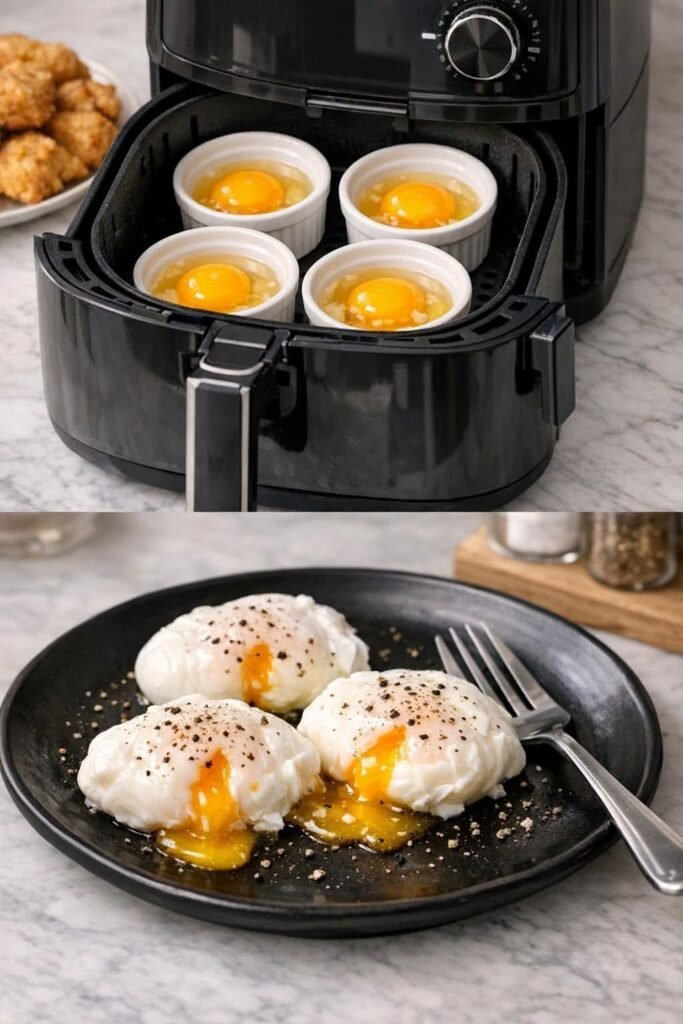

Air Fryer Poached Eggs: The Ultimate Guide to Perfectly Poached Eggs Every Time
Poached eggs are a breakfast favorite known for their delicate whites and rich, runny yolks. Traditionally, poaching eggs requires simmering water, vinegar, and careful timing to achieve the perfect result. While this method works well, it can be intimidating for beginners and sometimes leads to broken yolks or unevenly cooked eggs. Fortunately, using an air fryer provides a simple, reliable, and nearly foolproof alternative.
Air fryer poached eggs have become increasingly popular because they require minimal effort while delivering delicious results. Whether you’re preparing breakfast for yourself, making eggs for brunch guests, or meal-prepping healthy meals, the air fryer offers convenience without sacrificing taste or texture.
This guide explains everything you need to know about making poached eggs in an air fryer, including ingredients, equipment, step-by-step instructions, cooking tips, serving suggestions, troubleshooting, storage, nutritional benefits, and frequently asked questions.
Why Make Poached Eggs in an Air Fryer?
The air fryer is known for creating crispy foods with little oil, but it also excels at gently cooking eggs. Instead of placing eggs directly in water, the air fryer uses heated circulating air to warm small ramekins filled with hot water and eggs.
Some key benefits include:
- Easier than traditional poaching.
- No swirling water required.
- Less chance of breaking the egg.
- Consistent cooking results.
- Great for beginners.
- Easy cleanup.
- Perfect for preparing multiple eggs simultaneously.
If you’ve struggled with poaching eggs on the stovetop, the air fryer method is an excellent alternative.
Ingredients
To make two air fryer poached eggs, you’ll need:
- 2 large fresh eggs
- ½ cup hot water (¼ cup per ramekin)
- Nonstick cooking spray or a small amount of butter
- Salt, to taste
- Black pepper, to taste
Optional toppings include:
- Fresh herbs
- Red pepper flakes
- Parmesan cheese
- Avocado slices
- Everything bagel seasoning
- Chopped chives
Equipment Needed
Before getting started, gather the following kitchen tools:
- Air fryer
- Two oven-safe ramekins
- Measuring cup
- Spoon
- Tongs or oven mitts
- Slotted spoon (optional)
Small ceramic ramekins work best because they distribute heat evenly and fit comfortably inside most air fryer baskets.
Step-by-Step Instructions
Step 1: Preheat the Air Fryer
Preheat your air fryer to 350°F (175°C) for about three minutes. Preheating helps create even cooking conditions.
Step 2: Prepare the Ramekins
Lightly grease each ramekin using cooking spray or butter.
Add approximately ¼ cup of hot water to each ramekin.
Using hot water helps the eggs cook more evenly.
Step 3: Crack the Eggs
Carefully crack one egg into each ramekin.
Avoid breaking the yolk, as this affects the final presentation and texture.
Step 4: Place in the Air Fryer
Carefully transfer the ramekins into the preheated air fryer basket.
Try not to spill the water while moving them.
Step 5: Cook
Cook at 350°F (175°C) for approximately:
- 5 minutes for a very runny yolk
- 6 minutes for a soft poached egg
- 7 minutes for a medium yolk
- 8 minutes for a firmer yolk
Cooking times may vary depending on your air fryer model.
Step 6: Remove Carefully
Use oven mitts or silicone tongs to remove the hot ramekins.
Let them rest for about one minute.
Step 7: Serve
Use a spoon or slotted spoon to gently lift the egg from the ramekin.
Season with salt and pepper before serving.
Tips for Success
Use Fresh Eggs
Fresh eggs hold their shape much better than older eggs because the egg whites remain firmer.
Avoid Cold Water
Hot water speeds cooking and helps create the classic poached texture.
Don’t Overcook
Even one extra minute can turn a beautifully runny yolk into a hard-boiled center.
Check Early
Since every air fryer cooks differently, check your eggs one minute before the recommended cooking time.
Grease the Ramekins
A light coating of oil or butter prevents sticking and makes removing the eggs much easier.
Best Foods to Serve with Air Fryer Poached Eggs
Air fryer poached eggs pair wonderfully with many breakfast and lunch dishes.
Popular serving ideas include:
Toast
Serve on:
- Sourdough toast
- Whole wheat bread
- English muffins
- Bagels
Avocado Toast
Layer mashed avocado on toasted bread before topping with a poached egg.
Finish with chili flakes and lemon juice.
Breakfast Bowls
Add poached eggs to bowls filled with:
- Brown rice
- Quinoa
- Roasted vegetables
- Sweet potatoes
- Spinach
Salads
A warm poached egg makes an excellent addition to:
- Caesar salad
- Spinach salad
- Kale salad
- Mixed greens
The creamy yolk acts as a natural dressing.
Eggs Benedict
Air fryer poached eggs are perfect for homemade Eggs Benedict with:
- English muffins
- Canadian bacon
- Hollandaise sauce
Nutritional Benefits
Poached eggs are among the healthiest ways to prepare eggs because they require little or no added fat.
One large poached egg contains approximately:
- Calories: 70
- Protein: 6 grams
- Fat: 5 grams
- Carbohydrates: Less than 1 gram
- Vitamin D
- Vitamin B12
- Choline
- Selenium
Eggs provide high-quality protein that supports muscle repair, keeps you feeling full longer, and supplies essential nutrients for overall health.
Common Mistakes to Avoid
Overfilling the Water
Too much water may spill when moving the ramekins.
Stick with approximately ¼ cup.
Using Large Bowls
Large dishes increase cooking time and reduce consistency.
Small ramekins produce better results.
Skipping Preheating
A cold air fryer often leads to uneven cooking.
Cooking Straight from the Refrigerator
Allow eggs to sit at room temperature for about 10 minutes before cooking if possible.
Flavor Variations
You can customize your poached eggs in many delicious ways.
Mediterranean Style
Top with:
- Feta cheese
- Tomatoes
- Olives
- Oregano
Mexican Style
Serve with:
- Salsa
- Avocado
- Cilantro
- Jalapeños
Italian Style
Add:
- Basil
- Parmesan
- Pesto
- Cherry tomatoes
Spicy Style
Sprinkle with:
- Cayenne pepper
- Hot sauce
- Chili crisp
- Crushed red pepper flakes
Meal Prep Ideas
Although poached eggs taste best fresh, you can prepare the remaining meal components in advance.
Ideas include:
- Roasted vegetables
- Toast
- Cooked quinoa
- Fresh fruit
- Salad ingredients
Cook the eggs just before serving for the best texture.
Troubleshooting
Egg Whites Are Undercooked
Cook for an additional 30–60 seconds.
Yolks Are Too Firm
Reduce cooking time by one minute next time.
Eggs Stick to the Dish
Use more cooking spray or butter before adding the egg.
Egg Breaks Apart
Use fresher eggs and crack them gently into a small bowl before transferring to the ramekin.
Storage
Freshly poached eggs taste best immediately.
If necessary:
- Refrigerate for up to one day.
- Store in an airtight container with a little water.
- Reheat gently in warm water for about one minute.
Avoid microwaving, as it can overcook the yolk.
Frequently Asked Questions
Can I cook multiple eggs?
Yes. As long as your air fryer basket fits several ramekins without overcrowding, you can cook multiple eggs at once.
Do I need vinegar?
No. Unlike traditional stovetop poaching, vinegar is generally unnecessary when using the air fryer method.
Can I use silicone cups?
Yes. Silicone baking cups work well as long as they are heat-safe and stable.
Why are my cooking times different?
Different air fryer brands vary in heating power and airflow. Adjust the cooking time based on your appliance and your preferred yolk consistency.
Can I make hard-poached eggs?
Yes. Simply increase the cooking time to about 8–9 minutes, depending on your air fryer.
Final Thoughts
Air fryer poached eggs are an easy, convenient way to enjoy one of the most elegant egg dishes without the challenges of traditional stovetop poaching. With only a few simple ingredients, a pair of ramekins, and an air fryer, you can consistently create tender egg whites and perfectly cooked yolks in just minutes.
Whether served on buttered toast, layered over creamy avocado, added to a fresh salad, or used to make classic Eggs Benedict, these poached eggs are versatile, nutritious, and satisfying. By following the techniques and tips in this guide, you’ll be able to prepare restaurant-quality poached eggs at home with confidence. Once you master the timing that works best for your air fryer, this simple recipe is likely to become a regular part of your breakfast and brunch routine.