 James
James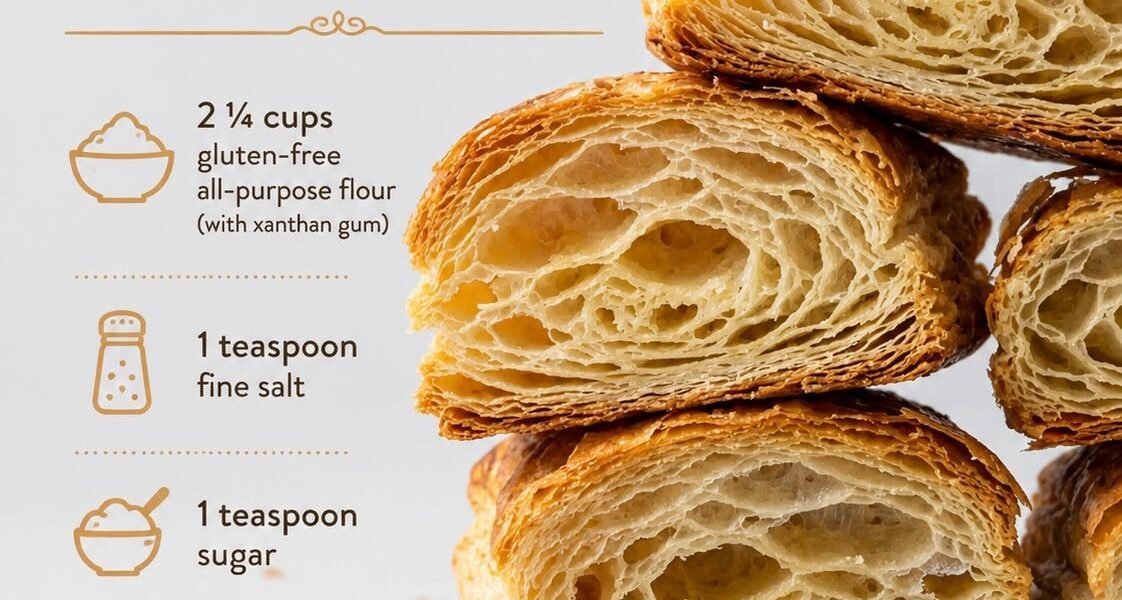
Description
Gluten-free puff pastry has a delicate texture with hundreds of crisp, flaky layers. This dough takes patience, but the final result can be used for sweet or savory dishes such as fruit tarts, hand pies, turnovers, sausage rolls, cheese pastries, palmiers, napoleons, and many other baked treats. Careful handling, proper chilling, and accurate measurements help create beautiful layers without gluten.
Preparation Time
- Preparation: 1 hour 15 minutes
- Chilling: 4–6 hours
- Baking: 20–35 minutes
- Total Time: About 6–8 hours
Yield
Makes about 2 large sheets of puff pastry.
Ingredients
Dry Ingredients
- 2½ cups gluten-free all-purpose flour blend
- ½ cup gluten-free tapioca starch
- ¼ cup potato starch
- 2 tablespoons cornstarch
- 1 teaspoon xanthan gum (skip only when already included within the flour blend)
- 1 teaspoon fine sea salt
- 1 tablespoon granulated sugar
Wet Ingredients
- ¾ cup very cold water
- 2 teaspoons lemon juice
- 1 teaspoon apple cider vinegar
Butter Block
- 2 cups very cold unsalted butter
- 2 tablespoons gluten-free flour blend for shaping
Extra
- More gluten-free flour for dusting
- Parchment paper
- Plastic wrap
Equipment
- Large mixing bowl
- Measuring cups
- Measuring spoons
- Bench scraper
- Rolling pin
- Pastry brush
- Plastic wrap
- Baking tray
- Parchment paper
- Sharp knife or pastry cutter
Step 1: Prepare the Dry Mixture
Place the gluten-free flour blend, tapioca starch, potato starch, cornstarch, xanthan gum, salt, and sugar into a large bowl. Whisk thoroughly until every ingredient becomes evenly combined. Proper mixing helps create consistent texture throughout the dough.
Step 2: Prepare the Liquid
Mix the cold water, lemon juice, and apple cider vinegar together. Keep the mixture chilled until needed.
Step 3: Form the Dough
Pour the cold liquid into the flour mixture a little at a time while gently stirring. Continue until the dough begins coming together. Press gently with clean hands until a rough dough forms. Avoid overworking because excessive handling can reduce the quality of the finished pastry.
Step 4: Rest the Dough
Shape the dough into a rectangle. Wrap tightly with plastic wrap. Chill for at least 45 minutes.
Step 5: Prepare the Butter Block
Place the cold butter between two sheets of parchment paper. Sprinkle with a little gluten-free flour. Pound gently with a rolling pin until the butter forms a flat rectangle about ½ inch thick. Return the butter to the refrigerator until firm yet flexible.
Step 6: Enclose the Butter
Roll the chilled dough into a rectangle about twice the size of the butter block. Place the butter onto one half of the dough. Fold the remaining dough over the butter, covering every edge completely. Seal gently.
Step 7: First Fold
Roll the dough carefully into a long rectangle. Fold one end toward the center. Fold the opposite end over the first fold, creating three layers. Wrap and chill for 45 minutes.
Step 8: Second Fold
Rotate the dough one-quarter turn. Roll once again into a long rectangle. Repeat the same folding method. Wrap well. Chill another 45 minutes.
Step 9: Third Fold
Repeat rolling and folding. Work slowly and keep the dough cool. Dust away excess flour before each fold.
Step 10: Fourth Fold
Complete another fold exactly as before. Wrap tightly. Chill for one full hour.
Step 11: Fifth Fold
Roll gently, keeping even pressure across the dough. Fold once more. Return to the refrigerator.
Step 12: Final Rest
Allow the dough to chill for at least one additional hour before shaping. Overnight chilling also works very well.
Rolling for Use
Dust the work surface lightly with gluten-free flour. Roll the pastry until about ⅛ inch thick. Trim rough edges with a sharp knife. Cut according to the chosen recipe.
Baking
Preheat the oven to 400°F (200°C).
Transfer shaped pastry onto a parchment-lined baking tray. Chill shaped pastry for 20 minutes before baking.
Bake for 20 to 35 minutes depending upon size. The pastry should become golden brown, crisp, and fully puffed.
Cool slightly before serving.
Helpful Tips
- Always keep every ingredient cold.
- Return the dough to the refrigerator whenever the butter begins softening.
- Use light pressure while rolling.
- Remove extra flour before folding.
- Sharp cuts help the pastry rise evenly.
- Avoid twisting the edges because sealed edges prevent proper lifting.
- Bake within a fully preheated oven.
- Cool baked pastry upon a wire rack for maximum crispness.
Sweet Filling Suggestions
- Apple cinnamon
- Blueberry
- Strawberry
- Cherry
- Peach
- Raspberry
- Chocolate
- Vanilla pastry cream
- Lemon curd
- Almond cream
- Sweet cream cheese
- Mixed berries
- Nut filling
- Caramel apple
Savory Filling Suggestions
- Cheese
- Mushroom
- Spinach
- Potato
- Chicken
- Turkey
- Beef
- Ham
- Vegetable mixture
- Broccoli and cheddar
- Sausage
- Tomato and mozzarella
- Herb cream cheese
- Roasted vegetables
Storage
Unbaked dough can remain refrigerated for up to 3 days.
Frozen dough keeps well for up to 2 months when wrapped carefully.
Baked pastry stays crisp for about 2 days within an airtight container. Reheat inside a hot oven for several minutes before serving.
Serving Ideas
Serve warm with soup, fresh salad, roasted vegetables, fruit preserves, whipped cream, chocolate sauce, custard, or powdered sugar. Use the pastry for breakfast treats, afternoon snacks, elegant desserts, party appetizers, festive holiday baking, family dinners, or special celebrations.
Result
The finished gluten-free puff pastry should have crisp outer layers, tender inner layers, rich buttery flavor, beautiful golden color, and excellent flakiness suitable for both sweet and savory recipes.